Anatomy of a Hit: How Hooks Win Engagements for Short-Form Content
The average Instagram engagement rate is under 0.5%. Our content channel just ran 90 days at 12.8% — on the same platform, in the same niche. The difference isn't budget or follower count. It's the hook.
Rhenn Taguiam
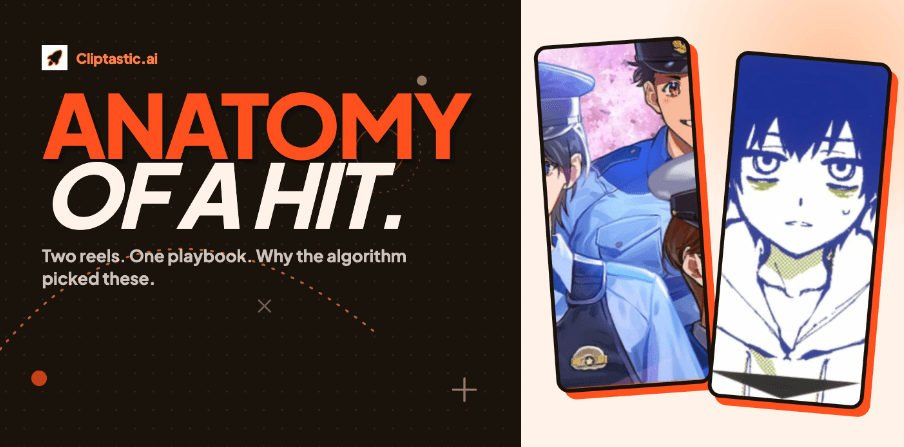
When you try to study the anatomy of a hit, you'd probably try to study it beside its peers. Yet two of the biggest Cliptastic shorts this quarter had nothing in common on the surface - different topics, different countries, different industries.
A Japanese government road safety campaign built like an anime dating sim. 509,718 views. 112,438 interactions.
A free puzzle game designed by a licensed doctor to simulate real schizophrenia symptoms. 434,951 views. 87,009 interactions.
But they hit the algorithm the same way, and for the same reason. Both made the viewer the subject of the story. Not the game. Not the PSA. The person watching it.
That's the pattern we've been chasing ever since.
The data behind the theory
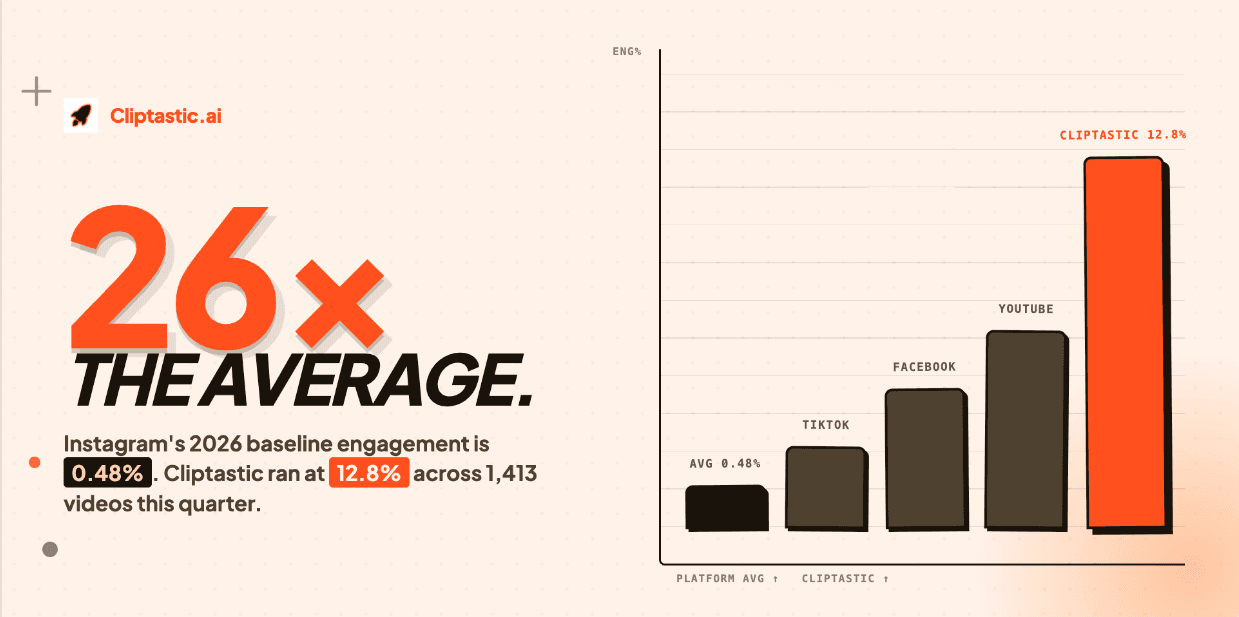
Between February 12 and May 11, 2026, Cliptastic tracked 4.42 million views across 1,413 videos on YouTube, TikTok, Instagram, and Facebook. Instagram absorbed 71% of that total - 3.14 million views, 404,586 interactions, and a 12.8% engagement rate.
The platform-wide Instagram average in 2026 sits at 0.48%. We ran at more than 26 times that. |
|---|
Every top-10 video by views and interactions came from Instagram. And when we mapped the top performers against the rest of the dataset, the same structural pattern showed up in the content that overperformed.
The clips weren't reporting news. They were reflecting the audience back at themselves - sometimes uncomfortably.
We're calling it the Psychological Mirror Effect.
What the Mirror actually does
The road safety video worked because the premise is a confession from a government. Japan was so unable to reach its drivers through conventional safety messaging that it built an anime romance experience instead.
The viewer isn't watching a PSA. They're watching proof that the people in charge are as deep in the cultural internet as they are. |
|---|
The schizophrenia game worked differently - and in some ways more powerfully: A licensed physician built a free puzzle game that puts the player inside the cognitive distortions his patients experience.
The comment section didn't behave like a gaming thread. It behaved like a support group. People shared personal experiences. They tagged friends. They asked the kind of questions you'd only ask if the content had cracked something open. |
|---|
That video pulled nearly 3x the interactions of our average viral clip in the same dataset. Not because it was louder or more polished. Because it was closer.
This is what the Mirror does: it takes a piece of gaming or pop culture news and redirects the camera. Instead of pointing at the product, it points at the person holding the controller.
The science isn't surprising - the Gap is
Wharton School research on viral content found that high-arousal content - content that triggers a strong emotional reaction, positive or negative - drives sharing at rates up to 34% higher than neutral, informative content. Morbid curiosity, empathy, recognition, discomfort - these are all high-arousal states.
The global horror and psychological game market was valued at $3.2 billion in 2025 and is projected to reach $5.8 billion by 2033. The audience isn't tolerating content that makes them feel something strange. They're actively seeking it.
What's surprising isn't that psychological content performs well. It's how badly standard announcements perform next to it.
An official casting announcement for Superman's Brainiac pulled 106 views in the same period these two clips were clearing half a million.
Same platform. Same posting window. Completely different frame.
The announcement told the audience something. The Mirror videos made the audience feel something about themselves.
The pattern holds across the Full Top 10
The road safety PSA and the schizophrenia game are the clearest examples. But the pattern runs deeper than two videos.
 |  |
|---|---|
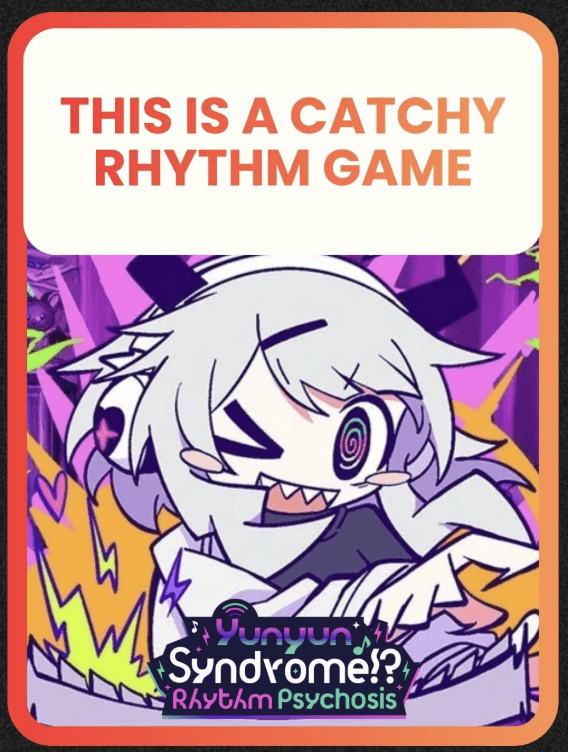
Our #5 overall - Capcom's internal committee of female employees making sure Leon Kennedy was attractive enough for Resident Evil - pulled 203,764 views and 34,746 interactions. | Our #1 clip this week - "Yunyun Syndrome!? Rhythm Psychosis turns internet obsession into gameplay" - took 101,722 views in seven days during a stretch when every other platform slowed down. |
The Leon design committee: On the surface it's a behind-the-scenes studio story. In practice, it's official confirmation of something the fandom already felt but never had receipts for. The comment section didn't react to the news. It reacted to being seen.
The game release: A rhythm game that essentially diagnoses compulsive internet behavior. The viewer isn't the audience. The viewer is the patient.
Every top performer in this dataset follows the same logic. The content works because the person watching it finds themselves somewhere inside it.
What this means for how we build content now
We didn't overhaul the operation. We changed one question. Before scripting anything, we now ask: what does this reveal about the audience?
Three things shifted in how we frame angles:
Find the confession inside the announcement: The Capcom story isn't about game development. It's about a billion-dollar studio officially validating what the fanbase already knew they wanted. Lead with the validation, not the studio note.
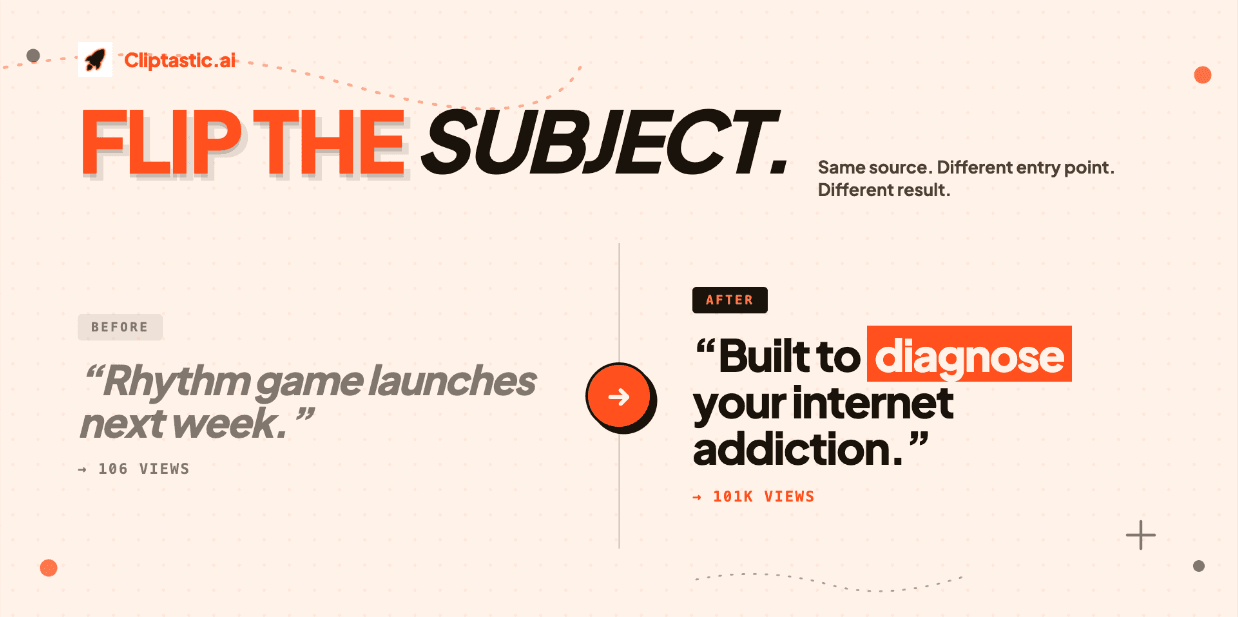
Flip the subject: "Rhythm game launches" is a product story. "This game was built to diagnose your internet addiction" is an audience story. Same source material. Different entry point. Different result.
Close the distance: The schizophrenia game and the Yunyun Syndrome clip both put the viewer inside the experience - not as an observer, but as the subject. Content that eliminates the gap between the story and the person watching it consistently outperforms content that keeps them at arm's length.
Where the Mirror works - and where it doesn't
This is an Instagram-first strategy. The platform's comment culture, save behavior, and share mechanics are all built for content that gives people something to process, argue about, or return to later.
TikTok in this dataset rewarded nostalgia and celebrity casting news - the Mirror got less traction there.
Facebook was close to dead: 117,959 views across 455 posts, with dozens of recent uploads generating fewer than 10 views each. Posting the same content to Facebook that performs on Instagram isn't a distribution strategy. It's a habit.
The 12.8% engagement rate didn't come from posting everywhere. It came from understanding where this specific type of content has room to land - and going deeper there instead of wider everywhere.
So, what now?
The anatomy of a hit this quarter has a pretty straightforward conclusion: Content that reports the news has a ceiling. Content that reflects the audience back at themselves does not.
The two biggest videos we've produced this quarter weren't the most expensive or the most timely.
They were the ones where a viewer looked at the screen and thought: that's me. Or: I need someone else to see this. |
|---|
That moment of recognition - that's the Mirror working. Build toward it, and the algorithm follows. Every time.